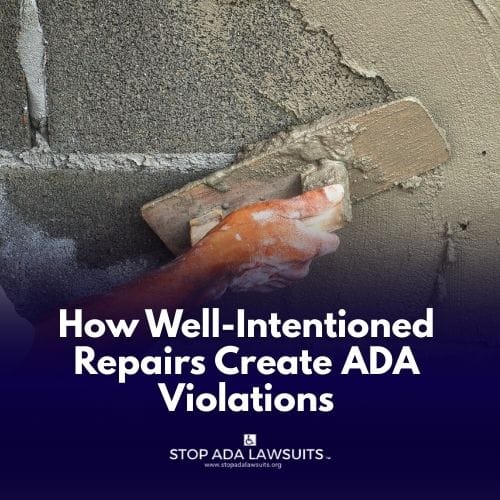
Many ADA violations don’t come from neglect.
They come from repairs that were meant to fix a problem — but unintentionally created a new one.
Parking lot repairs often focus on restoring function or appearance.
ADA compliance, however, is based on precise measurements and conditions, not intent.
This gap is where many violations begin.
Repairs Change More Than Just the Surface
Any repair performed in an accessible area has the potential to affect:
-
Slopes
-
Transitions between surfaces
-
Clear widths and clearances
-
Surface stability and slip resistance
Even small adjustments can push an area out of compliance.
Because ADA standards are measurement-based, these changes can become enforceable violations — even if the repair looks visually acceptable.
Patching Can Alter Slopes and Transitions
Patching is one of the most common sources of unintentional ADA issues.
Problems often arise when:
-
Patches add material without regrading
-
Edges are not feathered smoothly
-
Repairs create uneven transitions
In accessible routes, even minor elevation changes or slope variations can exceed allowable limits.
A patch that “fixes” a pothole can unintentionally:
-
Increase slope beyond tolerance
-
Create a trip hazard
-
Disrupt an accessible path
Overlays Can Reduce Clearances
Resurfacing or overlaying adds a new layer of material over existing pavement.
Without proper planning, overlays can:
-
Reduce vertical clearances
-
Alter ramp relationships
-
Change slope percentages
-
Affect drainage patterns
In accessible parking areas, these changes can impact compliance even if the overlay improves overall appearance.
Repairs Often Focus on Appearance, Not Measurements
Many repairs are evaluated visually:
-
The surface looks smoother
-
The area drains better
-
The damage is no longer visible
But ADA enforcement does not rely on visual approval.
Inspectors and plaintiffs rely on:
-
Digital levels
-
Tape measurements
-
Surface condition checks
A repair that appears successful may still fail compliance standards when measured.
Transitions Are a Frequent Failure Point
Transitions between:
-
Old and new pavement
-
Asphalt and concrete
-
Patches and surrounding surfaces
Are common sources of ADA violations.
If transitions are abrupt or uneven, they can:
-
Compromise accessibility
-
Create trip hazards
-
Trigger enforceable violations
These issues are often overlooked during routine maintenance.
Drainage Changes Can Create New Risk
Repairs can unintentionally alter drainage.
Improper grading may:
-
Create low spots
-
Cause standing water
-
Change slope direction
In accessible areas, standing water introduces both safety concerns and compliance issues.
Intent Does Not Matter in ADA Enforcement
One of the most important realities of ADA compliance is this:
Intent does not determine compliance. Measurements do.
A well-intentioned repair does not exempt a property from enforcement if the result fails to meet ADA standards.
This is why many violations are discovered after repairs, not before.
Why These Issues Are Common
Well-intentioned repairs create ADA violations because:
-
ADA requirements are highly specific
-
Pavement movement is gradual
-
Visual inspections miss subtle changes
-
Compliance is rarely rechecked after repairs
Without an ADA-focused review, even routine maintenance can introduce risk.
Prevention Requires a Compliance Lens
Preventing repair-related ADA violations requires:
-
Understanding how repairs affect measurements
-
Reviewing accessible areas before and after work
-
Verifying slopes, transitions, and surface conditions
-
Treating compliance as part of maintenance, not an afterthought
Small checks before and after repairs can prevent significant legal exposure later.
The Stop ADA Lawsuits Perspective
At Stop ADA Lawsuits, the focus is on education and prevention.
Understanding how repairs impact ADA compliance helps property owners and managers:
-
Reduce unintentional violations
-
Make informed maintenance decisions
-
Avoid reactive legal situations
Compliance should be planned and monitored, not assumed.
Stay Informed and Stay Ahead
Many ADA violations begin with repairs that were meant to help.
Learning how repairs affect compliance is one of the most effective ways to reduce risk.
👉 Explore more ADA compliance resources
to better understand how maintenance decisions impact accessibility, safety, and enforcement.
Staying informed today helps prevent problems tomorrow.