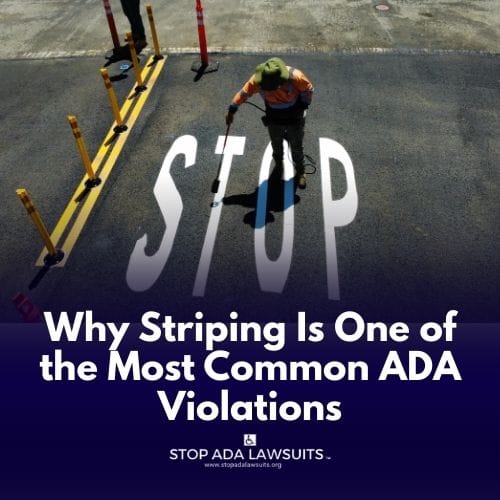
Striping is often treated as cosmetic.
Fresh paint improves appearance, organizes traffic, and gives the impression that a parking lot is being maintained.
However, under ADA standards, striping is not decorative — it is enforceable.
This is why striping-related issues are among the most common ADA violations found in parking lots.
ADA Striping Has Specific Requirements
Accessible parking stalls, access aisles, and loading zones must be:
-
Clearly visible
-
Correctly sized
-
Properly located
-
Consistently marked
These requirements are defined by measurements and visibility standards, not by general appearance.
If markings do not meet these criteria, the area can be considered noncompliant — even if the pavement itself is in good condition.
Fading Happens Gradually — Violations Don’t
One reason striping violations are so common is that fading happens slowly.
Paint wears down due to:
-
Traffic
-
Sun exposure
-
Weather
-
Surface oxidation
Because this process is gradual, markings can fall out of compliance long before they appear “bad” to the eye.
By the time striping is obviously faded, compliance has often already been lost.
Visibility Is Enforceable
ADA enforcement does not require markings to be completely gone.
If striping is:
-
Difficult to see
-
Inconsistent
-
Confusing
-
Lacking sufficient contrast
It may already fail enforceable standards.
Visibility is not subjective — inspectors document it with photographs and site conditions.
Incorrect Dimensions Are a Frequent Issue
Striping problems are not limited to fading.
Common issues include:
-
Incorrect stall widths
-
Improper access aisle dimensions
-
Missing or misaligned markings
-
Repainting over shifted pavement without re-measuring
Even when striping is freshly applied, incorrect dimensions can result in violations.
Striping Can Be Affected by Pavement Movement
As pavement moves over time, original striping layouts may no longer align with compliant conditions.
Changes in:
-
Slopes
-
Transitions
-
Surface condition
Can affect whether striped areas still meet ADA requirements.
Repainting without evaluating the underlying surface can preserve — or even worsen — compliance issues.
Repairs Can Invalidate Existing Striping
Patching, overlays, or surface adjustments can alter:
-
Slopes
-
Elevation
-
Drainage
When this happens, existing striping may no longer mark compliant areas.
Striping that was once correct can become misleading or noncompliant after repairs.
Why Striping Issues Are Often Overlooked
Striping is frequently overlooked because:
-
It appears minor
-
It is inexpensive compared to structural repairs
-
It is treated as a maintenance item, not a compliance item
As a result, striping is often repainted without reviewing compliance impacts.
Why Striping Violations Are Easy to Enforce
From an enforcement standpoint, striping violations are straightforward:
-
They are visible
-
They are measurable
-
They are easy to document
-
They require minimal interpretation
This makes them a common entry point for ADA complaints.
The Stop ADA Lawsuits Perspective
At Stop ADA Lawsuits, striping is treated as a compliance element, not just a maintenance task.
Understanding how striping affects accessibility helps property owners:
-
Avoid preventable violations
-
Maintain clarity in accessible areas
-
Reduce unnecessary legal exposure
Education and awareness are key to prevention.
Stay Informed and Stay Ahead
Many ADA striping violations occur not because of neglect, but because requirements are misunderstood.
Learning how striping is evaluated under ADA standards is an important step toward prevention.
👉 Explore more ADA compliance resources
to better understand how markings, measurements, and maintenance decisions affect accessibility and enforcement.
Staying informed today helps prevent problems tomorrow.